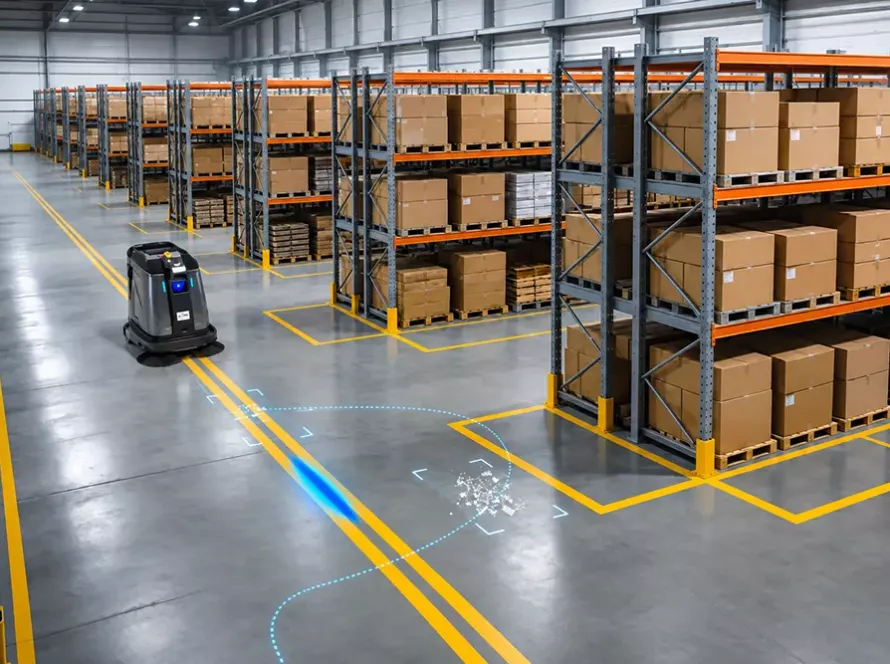
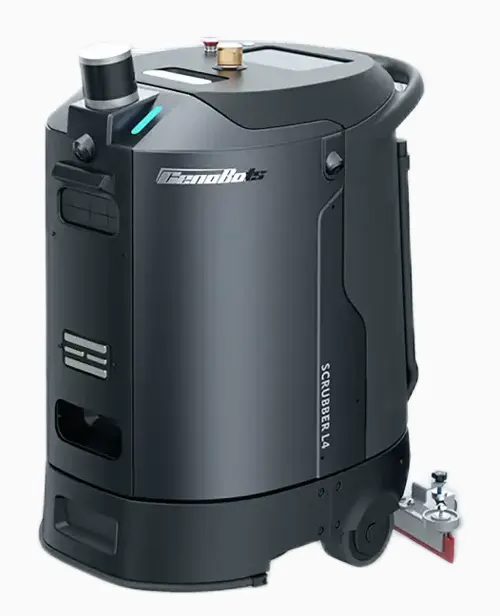
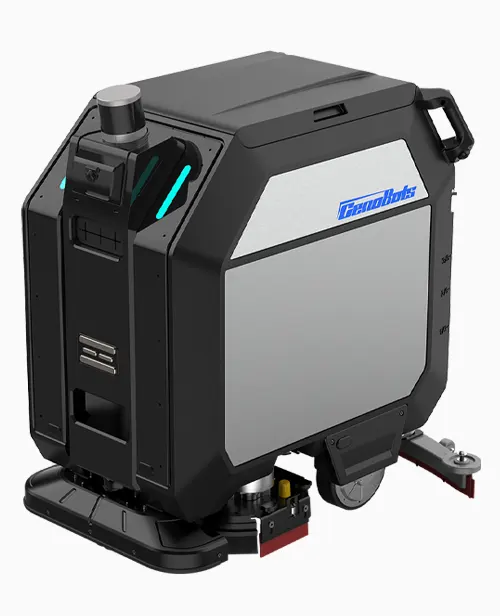
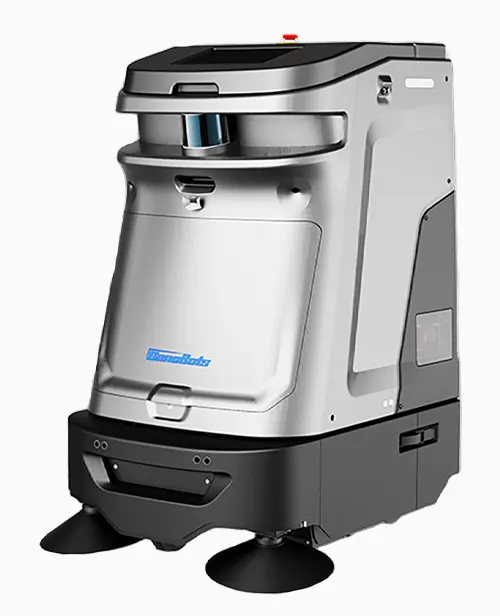


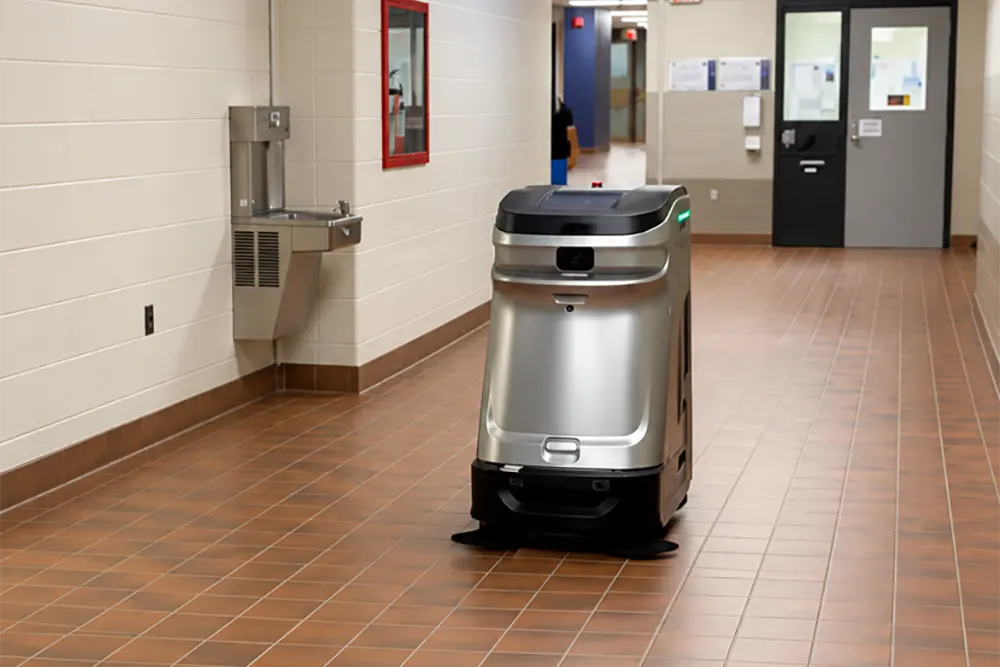
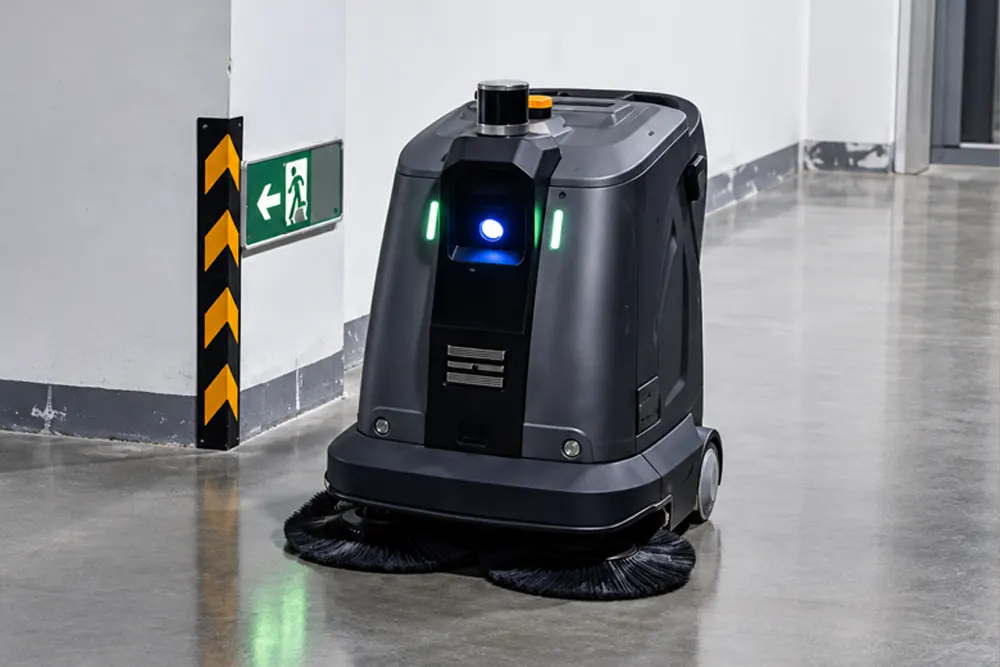
How does cenobots spot cleaning work? Spot Cleaning is a targeted cleaning function that allows a CenoBots robot to focus on localized dirt instead of responding to every situation by cleaning the entire surface again. The robot detects an area with debris or a higher concentration of dirt and directs its work toward the location that requires cleaning.
How does the robot find the area that needs additional cleaning?
The robot uses its perception systems and algorithms to detect dirt during operation and associate it with a specific area. Once it determines where cleaning is required, it can adjust its movement and direct cleaning toward that location instead of unnecessarily repeating the cleaning process across the entire surface.
A similar principle applies more broadly in robotics: NIST states that robotic perception systems combine sensors and algorithms to transform data from the physical environment into information that the robot needs to perform tasks.
A broader autonomous navigation and perception system enables this type of response. Learn more about how the robot uses AI, sensors, and environmental data in the guide: how an autonomous cleaning robot works.
Which CenoBots robots have Spot Cleaning?
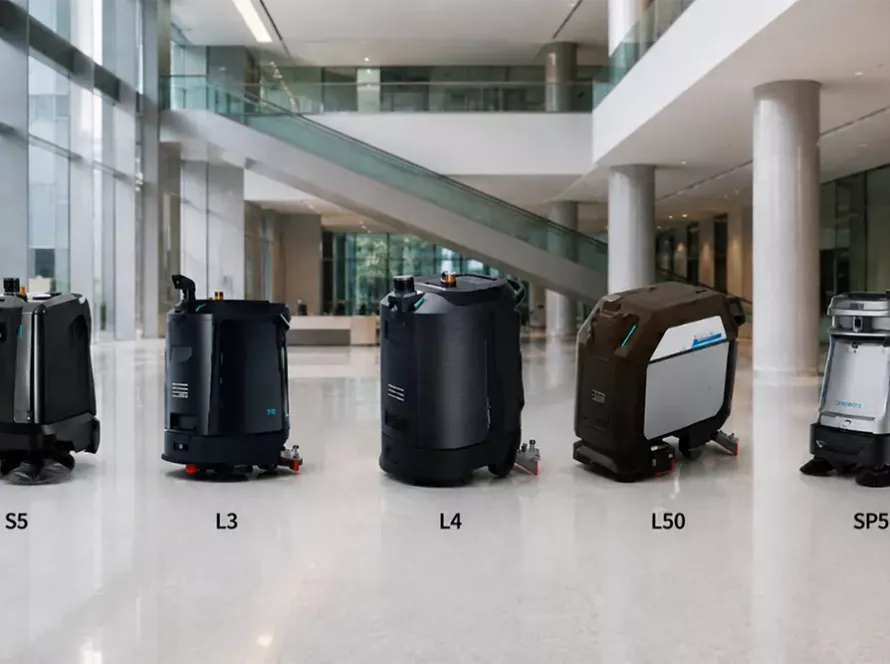
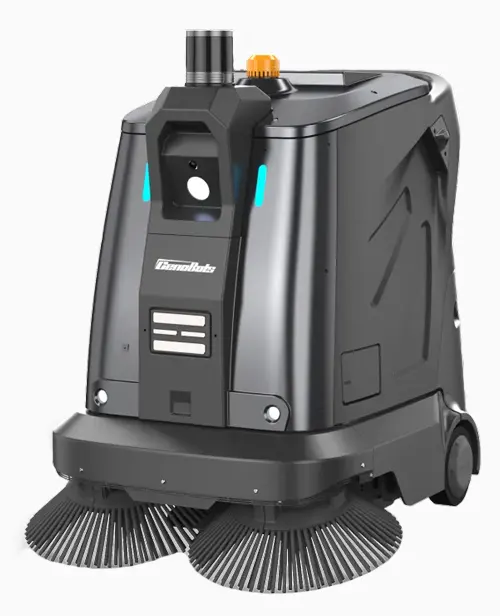
CenoBots currently explicitly lists Spot Cleaning for the SP50 and S5 models. The SP50 is an autonomous vacuuming and sweeping robot in which AI-powered targeted cleaning serves as one of the core functions, while the S5 uses Spot Cleaning to focus on localized areas with higher concentrations of industrial dirt and debris.
How does Spot Cleaning work on the SP50?
On the SP50, Spot Cleaning forms part of the AI-powered targeted cleaning approach: the robot can direct its work toward areas that require intervention, while the manufacturer also separately lists Full Coverage Cleaning. This means that the SP50 does not clean only individual stains or pieces of debris but supports different approaches to surface cleaning.
How does Spot Cleaning work on the S5?
On the S5, Spot Cleaning allows the robot to focus more precisely on areas with larger amounts of localized debris. The function suits the S5’s role as an industrial sweeping robot, so the manufacturer specifically highlights its use in demanding environments where dust, packaging, shavings, and other debris may occur.
For perception and navigation, the S5 uses a 32-channel 3D LiDAR with a range of up to 150 metres and a 100 TOPS NVIDIA AI computing platform. The manufacturer describes these systems within the context of AI navigation and perception, while it separately defines Spot Cleaning as a function for precisely targeting areas with higher concentrations of dirt.
Therefore, there is no need to claim that LiDAR itself “recognizes dirt.” The official source confirms its role in mapping, perception, and safe navigation, while Spot Cleaning represents a broader function of the robotic system.
Does Spot Cleaning mean that the robot does not clean the entire surface?
No. Spot Cleaning does not mean that the SP50 is limited to targeted cleaning only. CenoBots separately lists Spot Cleaning and Full Coverage Cleaning for this model, with different maximum theoretical productivity rates. This clearly distinguishes targeted responses to dirt from systematic cleaning of a planned surface.
When does the function provide an advantage in a commercial facility?
Spot Cleaning is particularly useful when cleaning needs change throughout the day and are not evenly distributed across the facility. Instead of repeating a complete cleaning cycle because of localized debris, the robot can direct an additional cleaning intervention toward the problematic area and adapt its work to the actual condition of the space.
For the SP50, CenoBots lists hotels, hospitals, retail spaces, and educational facilities as application scenarios. The S5 focuses more on demanding industrial environments, including logistics centres, manufacturing facilities, and large warehouses.
Table: Examples of when Spot Cleaning can be useful
| Situation in the facility | What happens | Role of the Spot Cleaning function |
| High-traffic entrance | Dirt appears more frequently on one part of the floor | Enables a targeted response to the area that requires additional cleaning |
| Passage between zones | Debris appears locally as people or equipment move through the area | The robot can direct cleaning toward the detected dirt |
| Retail space | Individual pieces of debris may appear between regular cleaning cycles | Spot Cleaning enables intervention without requiring the robot to clean the entire zone again because of that specific area |
| Warehouse or logistics space | Packaging and other debris may appear only in certain areas | Targeted cleaning directs the robot’s work toward the problematic location |
| Manufacturing area | The amount of debris may vary between individual zones | The robot can perform additional cleaning in an area where it detects a greater need for cleaning |
How does cenobots spot cleaning work – FAQ
Does Spot Cleaning need to be activated separately before every task?
The method for starting and configuring the Spot Cleaning function depends on the robot model and configuration. Official CenoBots sources confirm the function itself on the S5 and SP50 but do not describe every step required to activate it in every operating scenario. Therefore, users should check the instructions for the specific model to determine the correct configuration method.
Can Spot Cleaning be used when people are present in the area?
Spot Cleaning does not change the basic principles of the robot’s autonomous movement. During operation, the robot continues to use its perception and navigation systems to detect its surroundings and obstacles. However, operating conditions depend on the specific environment, so users must follow the manufacturer’s safety guidelines for the relevant model when planning a task.
Does Spot Cleaning require an internet connection?
The official S5 and SP50 pages confirm Spot Cleaning as a robot function, but they do not provide enough information to determine whether every part of its operation requires an internet connection. Therefore, Spot Cleaning should not automatically be described either as a completely offline function or as a function that necessarily requires a constant internet connection.
Does the Spot Cleaning function require additional equipment?
Available CenoBots descriptions present Spot Cleaning as a function of the robotic system itself, rather than as a separate accessory that users install later for targeted cleaning. However, users should check the specific requirements, function availability, and equipment configuration for the S5 or SP50 intended for a particular facility.
Cleaning does not have to be the same everywhere. What matters is applying the right cleaning where it is needed. See which solution suits your facility.
About the author:
Milja Tonić – SEO Content Strategist & Copywriter
Milja Tonić is an SEO Content Strategist and Copywriter who specializes in creating expert content in the fields of facility management, professional maintenance of commercial facilities, and cleaning process automation.
Through research, SEO strategy, and original content development, she creates content about professional hygiene, facility management, and the use of autonomous cleaning robots in different commercial environments.