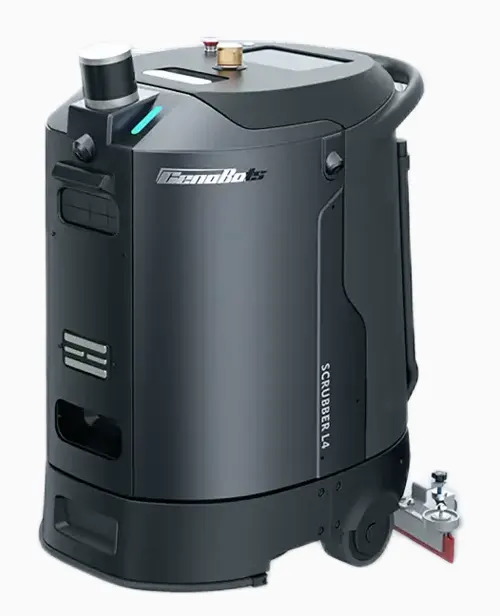
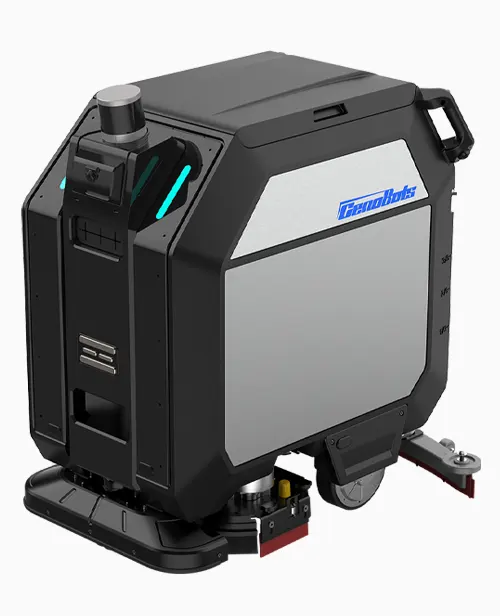
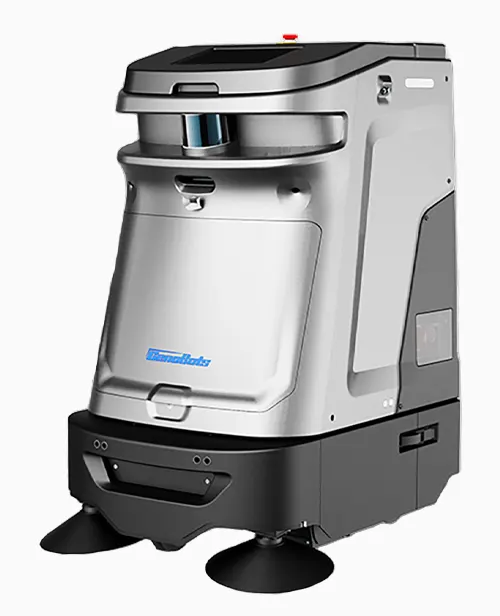


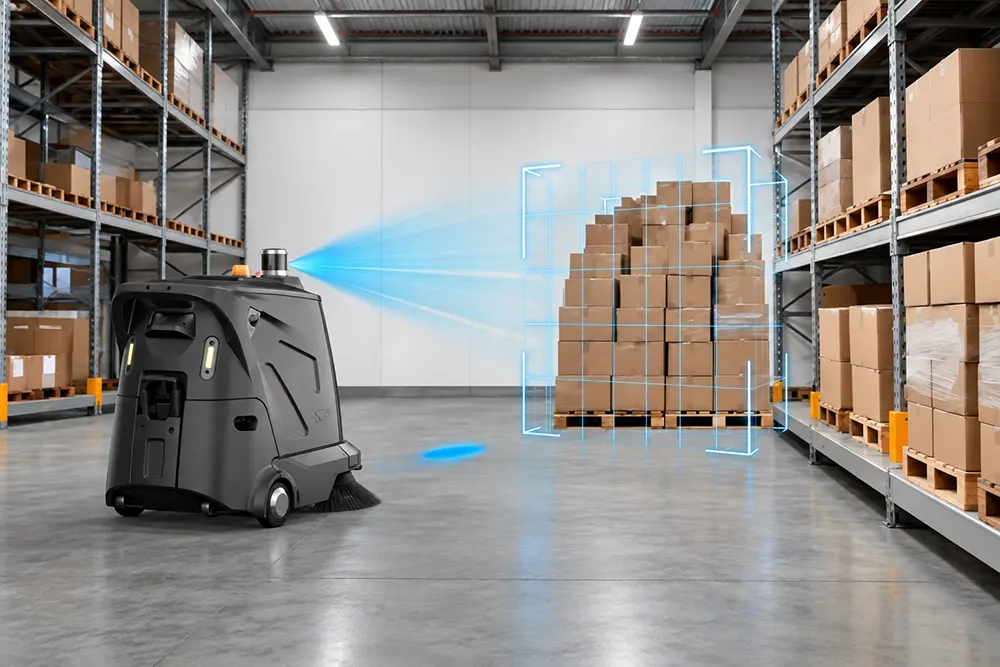
How does an autonomous cleaning robot work? An autonomous cleaning robot combines four interconnected systems:
- sensors
- artificial intelligence
- movement
- and a cleaning mechanism
Together, they enable it to map the space, determine its position, identify obstacles, plan a route, and scrub, sweep, or vacuum without constant operator control, while the complete guide to CenoBots AI cleaning robots provides an overview of the models, their specifications, and applications. Here, the focus is on the technology behind autonomous operation: how the robot sees the space, knows where it is, plans its movement, and responds to changes during cleaning.
What makes a robot truly autonomous?
A combination of sensors that collect data about the environment, an AI computer that interprets this data and makes decisions, a mobility system that follows the planned route, and a cleaning mechanism that performs the physical task makes the robot autonomous. Without any one of these four elements, the robot would depend on constant human control.
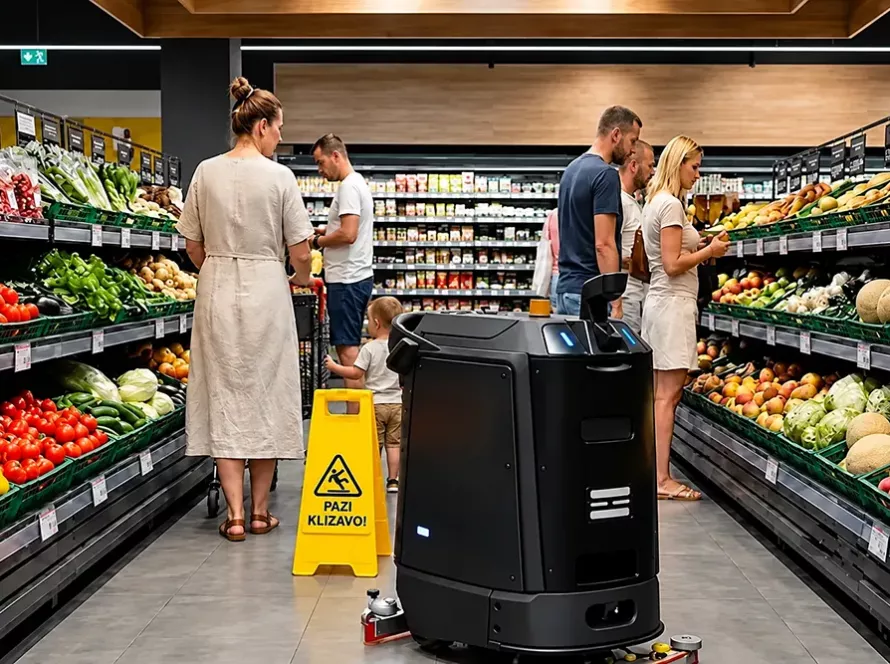
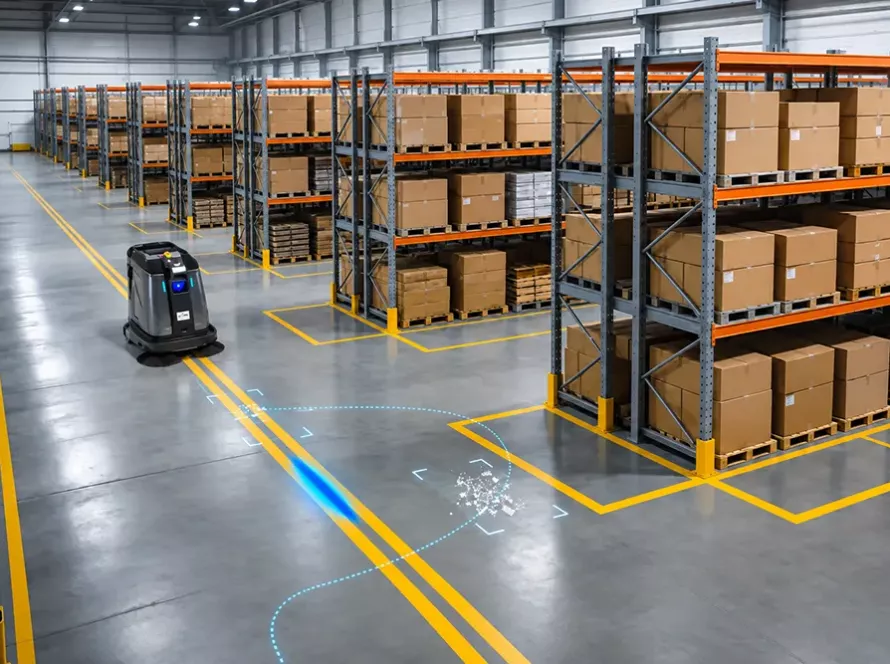
This is particularly important in commercial facilities because a robot rarely operates in an empty, static space. For example, the L3 model uses these four systems, among other things, in narrow hospital and school corridors, while the S5 applies the same principles in open warehouse aisles with forklift traffic. The architecture remains the same, but its configuration suits an entirely different environment.
How does the robot map the space before it starts cleaning?
Before its first autonomous cleaning cycle, the robot uses LiDAR and cameras to scan the facility and create a digital map of walls, columns, passageways, and fixed obstacles. The facility team then uses this map to define cleaning zones, restricted areas, and the work schedule, giving the robot a foundation for all future routes.
How does the robot see the space around it?
The robot “sees” through a combination of 3D LiDAR sensors, depth cameras, and, in certain models, bumper and IMU (inertial measurement unit) sensors. LiDAR uses laser pulses to measure distances to objects and generate spatial data, while cameras add visual and depth information that LiDAR alone cannot provide.
The number of LiDAR channels and the combination of additional sensors vary from one model to another. The L3 uses a significantly denser 96-channel LiDAR system for precise navigation in narrow spaces, while the other models use 32-channel LiDAR with a range of up to 150 metres and combine it with cameras and additional sensors when operating in busier areas.
| Model | LiDAR | Additional perception sensors |
| L3 | 96-channel 3D LiDAR | |
| L4 | 32-channel 3D LiDAR, 150 m range | 3D depth camera, bumper, IMU |
| L50 | 32-channel 3D LiDAR, 150 m range | depth cameras |
| S5 | 32-channel 3D LiDAR, 150 m range | |
| SP50 | 32-channel 3D LiDAR, 150 m range | 3D depth camera, bumper, IMU |
How does the robot know its exact location while operating?
Localisation is the process through which the robot determines its position in a space by using sensor data and an environmental map. When the system simultaneously determines the robot’s position and builds or updates the map, we call the process SLAM (Simultaneous Localisation and Mapping).
How does the robot plan its route through the facility?
Once it knows its location, the robot plans a path that covers the designated zone with minimal overlap, maintains appropriate spacing between passes, and avoids dead ends. A well-planned route delivers more predictable cleaning than manual work because the robot follows the same logic every time instead of depending on an individual operator’s habits.
The working width directly affects how quickly the robot covers the space:
- L3, with a working width of 400 mm, moves through narrow retail aisles
- L4, with a working width of 450 mm, also follows shelf edges at a distance of less than 3 cm
- L50, with a working width of 510 mm, covers larger open areas in fewer passes
How does the robot detect and avoid obstacles in real time?
The robot combines LiDAR, depth cameras, and safety sensors to detect people, trolleys, pallets, or temporary obstacles that were not part of the original map while it moves. Depending on the situation, it slows down, stops, or changes its path instead of remaining stationary when it encounters the first obstacle.
In certain models, this function goes one step further:
- S5 features a dedicated Vehicle Recognition function for warehouses and car parks where forklifts and vehicles operate
- models in the L series adapt obstacle processing to the density of people and equipment typical of retail and healthcare facilities
How does the AI system “understand” what the robot sees?
In addition to basic obstacle detection, the AI system processes the data that the robot receives from LiDAR, cameras, and other sensors to distinguish between different situations in its environment and adapt its movement. Certain CenoBots models use more advanced AI models to interpret complex data and operate in changing environments.
In practical terms, this system helps the robot distinguish between a person who is passing through temporarily and a permanent obstacle that requires a route change. It also helps the robot identify the type of dirt and prioritise the areas that genuinely require cleaning.
| Model | AI platform |
| L3 | NVIDIA AI chip, 100 TOPS |
| L4 | NVIDIA AI chip, 32 TOPS |
| L50 | NVIDIA AI chip, 32 TOPS, ~10 billion parameters (“big model”) |
| S5 | NVIDIA AI chip, 100 TOPS |
| SP50 | NVIDIA AI chip, 32 TOPS |
How does the robot physically clean the floor?
The cleaning method depends on the type of robot:
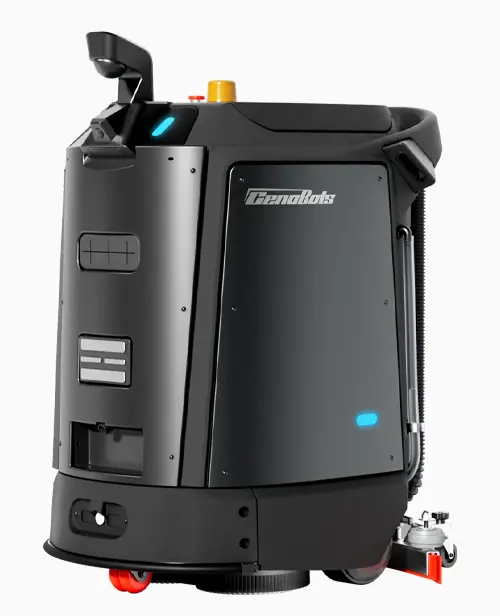
- floor-scrubbing and drying models dispense cleaning solution, scrub the floor, and vacuum the dirty water into a separate tank
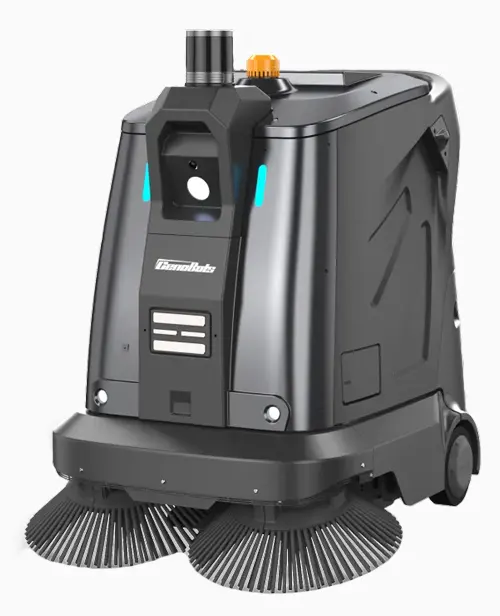
- sweeping robots use brushes to collect dry debris in a waste bin
- vacuuming and spot-cleaning robots target visible dirt on hard floors and carpets.
| Model | Cleaning type | Key components | Working width |
| L3 | Scrubbing and drying | 25 L solution tank, brushes, squeegee, dirty-water vacuum system | 400 mm |
| L4 | Scrubbing and drying | 38 L solution tank, edge-cleaning brushes (up to 3 cm from the wall) | 450 mm |
| L50 | Scrubbing and drying | 55 L solution tank, five-stage water filtration and recirculation | 510 mm |
| S5 | Dry sweeping | Side and main brushes, 50 L waste bin, HEPA filtration | 820 mm |
| SP50 | Vacuuming and spot cleaning | 18 L dust bag + 5 L waste bin, CRC technology (reprocesses the same area until it achieves a satisfactory result) | 720 mm (with side brushes) |
How does the robot recharge and resume operation during the day?
The robot monitors its battery level and, once it reaches a defined threshold, autonomously pauses cleaning and returns to the charging station by using its stored map and current position. For floor-scrubbing robots, certain stations also refill the water tank and empty the waste tank automatically, reducing the need for manual servicing.
The differences between the models become most apparent here: the L3 uses a dedicated WS3 station (with the optional WT3 mobile tank for facilities without an accessible water connection), the L4 and L50 can use an optional four-in-one workstation, while the S5, as a dry-cleaning robot, requires no water refill and returns only to the battery charging station.
| Model | Battery | Charging time | Operating time | Station type |
| L3 | LFP 60 Ah | 1.5–2 h | up to 4 h | WS3 (charging + water + detergent), optional WT3 mobile tank |
| L4 | LFP 70 Ah | 2.7 h | up to 4.5 h | optional four-in-one station (charging + water + detergent) |
| L50 | 120 Ah | not publicly available | up to 6 h | four-in-one station (charging + water + detergent) |
| S5 | LFP 75 Ah | 2 h (fast charging) | 5–7 h | charging station (no water refill) |
| SP50 | LFP 120 Ah | 4 h | 13 h (spot cleaning) / 8 h (regular mode) | charging station |
You can read more about charging and battery life on the blog: Cleaning robot battery and charging
Why does this matter when choosing a robot for a facility?
Understanding how a robot sees, interprets, and cleans a space helps facility managers ask specific questions instead of relying solely on marketing claims. The question, therefore, is not simply “which robot has the more powerful sensor”, but which complete system—the sensors, AI, mobility, and cleaning mechanism working together—best suits the specific space and task.
How does an autonomous cleaning robot work?- FAQ
Does the robot have to remap the entire space every time something changes?
No, not entirely. The base map remains the same, while continuous scanning allows the robot to detect temporary changes—a chair that someone has moved, a new pallet, or an occupied passageway—and adapt its movement without remapping the entire space.
Do all models recharge in the same way?
No. Floor-scrubbing robots (L3, L4, L50) generally use stations that automatically refill their water tanks in addition to charging their batteries, while the dry-sweeping robot (S5) and vacuuming robot (SP50) require battery charging only, with no water refill.
Technology is only the beginning. The right choice depends on the space, the task, and the operating method. Let us explore together how CenoBots can fit into your facility.
About the author:
Milja Tonić – SEO Content Strategist & Copywriter
Milja Tonić is an SEO Content Strategist and Copywriter who specialises in creating expert content on facility management, professional commercial property maintenance, and the automation of cleaning processes.
Through research, SEO strategy, and original content development, she creates content about professional hygiene, facility management, and the use of autonomous cleaning robots in various commercial environments.