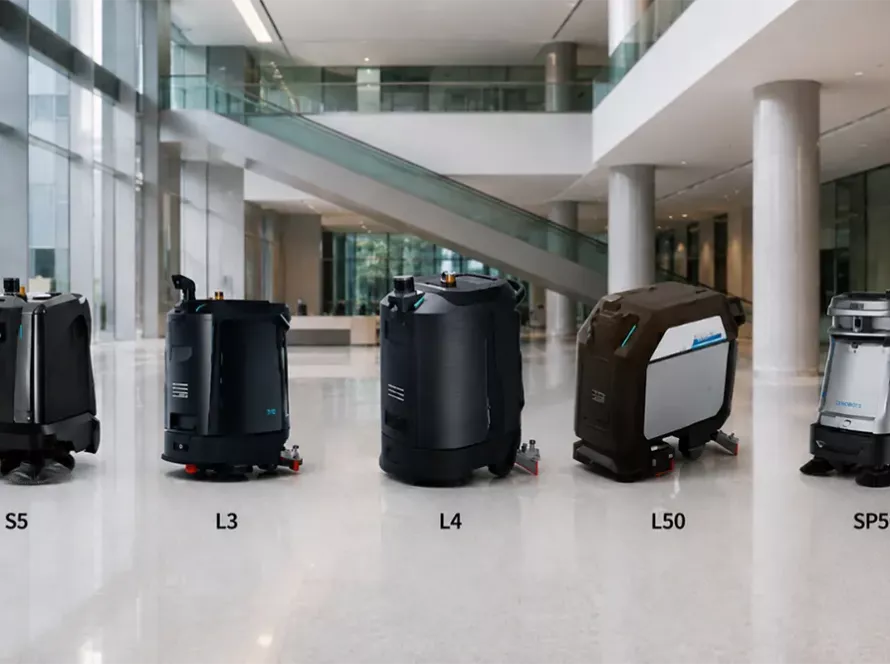


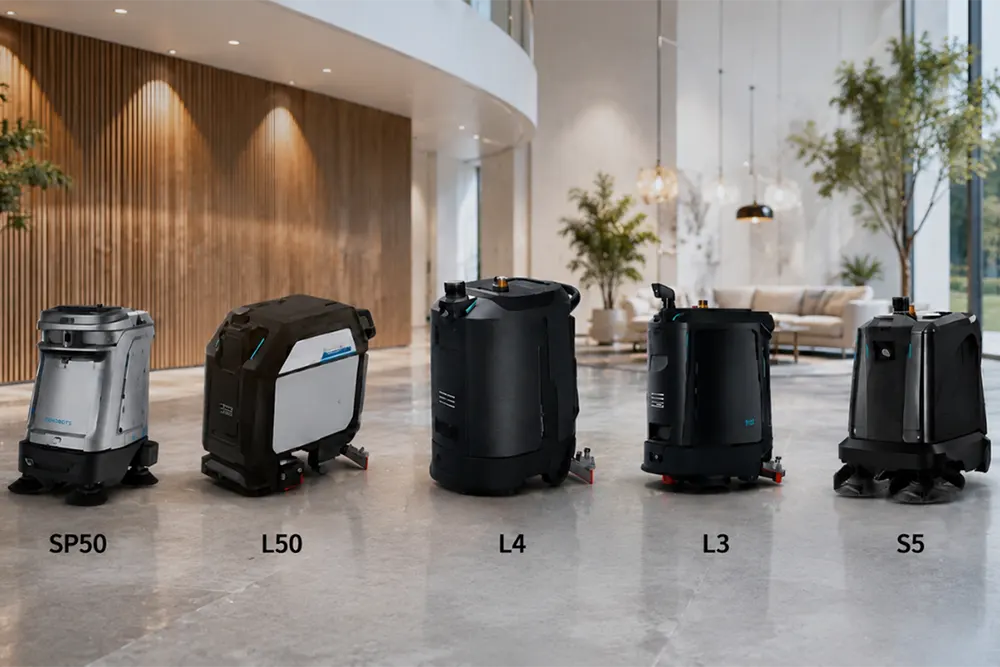
CenoBots cleaning robot models differ in terms of:
- cleaning method
- working width
- capacity
- productivity
- the conditions they are designed to operate in
L3, L4, and L50 scrub and dry hard floors, S5 autonomously sweeps and collects dry debris, while SP50 vacuums and uses AI Spot Cleaning for targeted cleaning.
The CenoBots range includes five models:
Although they are all professional autonomous floor-cleaning robots, their technical characteristics show that they are not designed for the same task.
They differ in working width, water tank or debris container capacity, theoretical productivity, dirt removal method, and special features.
This page therefore provides a technical overview of the models and their most important specifications. You can learn more about how AI cleaning robots work and how to choose one in our dedicated guide.
What are the specifications of the CenoBots L3 robot?
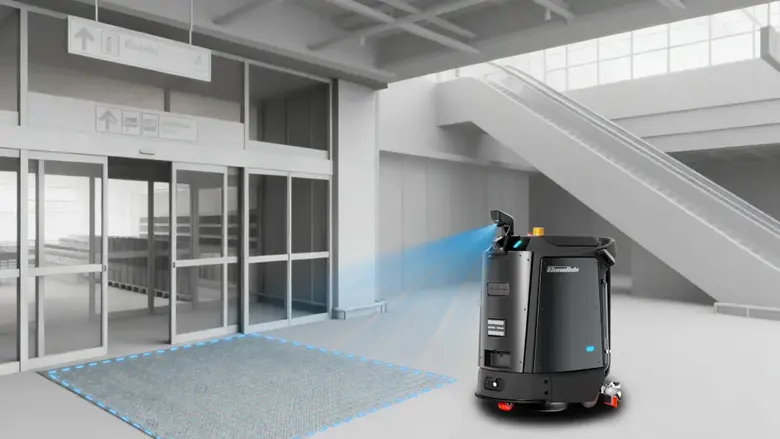
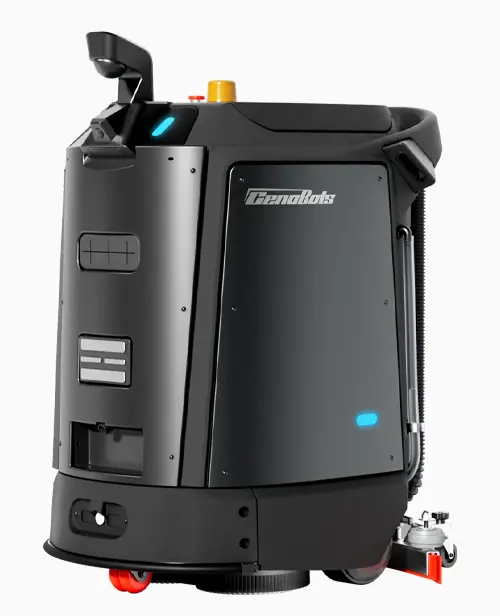
CenoBots L3 is a compact autonomous scrubber dryer with a floor-scrubbing width of 400 mm and a minimum passage width of 700 mm. Its clean-water and wastewater tanks each hold 25 litres, its maximum theoretical productivity reaches 2,016 m²/h, and its battery provides up to four hours of operation in ECO mode.
| Specification | CenoBots L3 |
| Dimensions (L × W × H) | 765 × 572 × 1,000 mm |
| Scrubbing width | 400 mm |
| Minimum passage width | 700 mm |
| Clean-water tank | 25 L |
| Wastewater tank | 25 L |
| Brush system | two disc brushes |
| Brush pressure | 18 kg |
| Max. theoretical productivity | 2,016 m²/h |
| Max. speed | 1.4 m/s |
| Max. gradient | 8% |
| Battery | LFP, 60 Ah / 25.6 VDC |
| Max. runtime | up to 4 h in ECO mode |
| Charging time | 1.5-2 h |
| AI computer | NVIDIA AI, 100 TOPS |
| Navigation and sensors | 96-channel 3D LiDAR + sensor system for detecting obstacles and objects at floor level (cables, carpets) |
One of the most important details about the L3 is the relationship between its physical width and the space it needs for autonomous movement. The robot body is 572 mm wide, while the declared minimum passage width is 700 mm. You should therefore not treat these two figures as identical when planning its use.
The L3 can connect to the WS3 Workstation, which automates battery charging, clean-water refilling, wastewater drainage, and detergent refilling. The WT3 Mobile Water Tank is also available, with a capacity of 60 L for clean water and 50 L for wastewater.
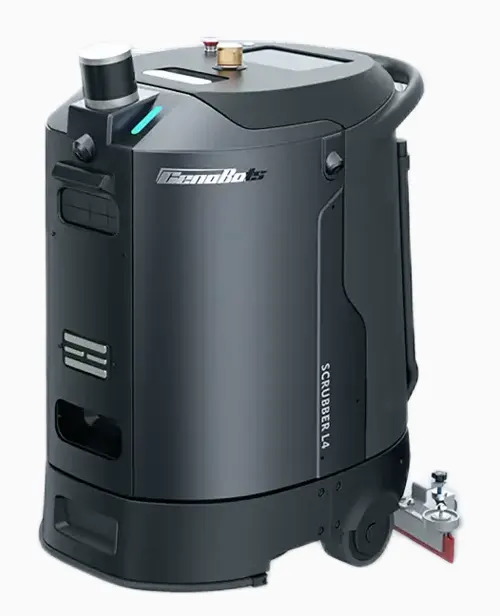
What are the specifications of the CenoBots L4 robot?
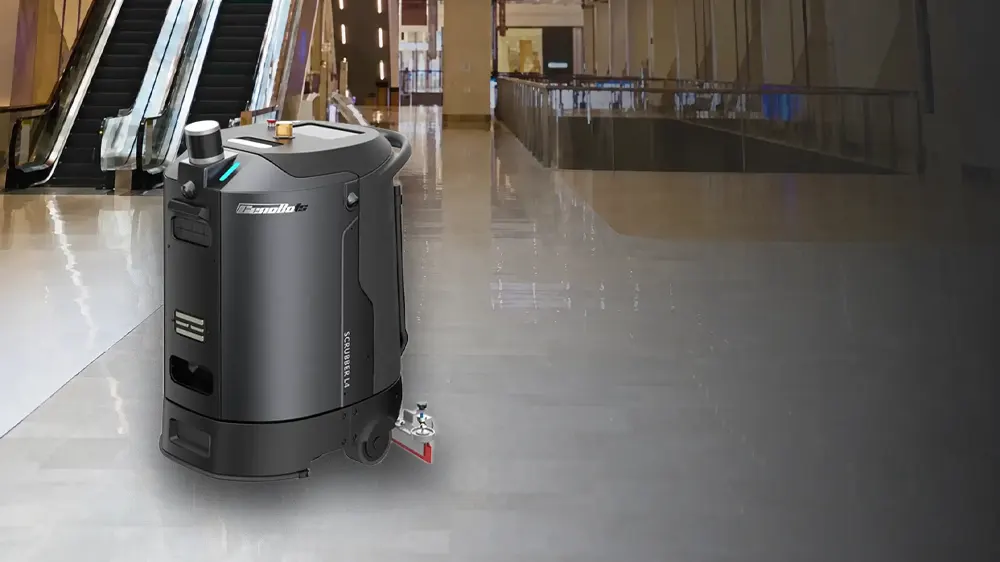
CenoBots L4 is an autonomous scrubber dryer with a floor-scrubbing width of 450 mm, a 38 L clean-water tank, and a 36 L wastewater tank. Its maximum theoretical productivity reaches 1,944 m²/h, while the Smart Flow system and its ability to clean approximately 3 cm from walls distinguish its technical capabilities.
| Specification | CenoBots L4 |
| Dimensions (L × W × H) | 810 × 615 × 1,075 mm |
| Cleaning method | floor scrubbing and drying |
| Scrubbing width | 450 mm |
| Squeegee width | 740 mm |
| Clean-water tank | 38 L |
| Wastewater tank | 36 L |
| Brush pressure | 20 kg |
| Brush speed | 270 RPM |
| Max. theoretical productivity | 1,944 m²/h |
| Max. speed | 1.2 m/s |
| Max. gradient | 8% |
| Battery | LFP, 70 Ah / 24 VDC |
| Max. runtime | up to 4.5 h |
| Charging time | approximately 2.7 h |
| Noise level | ≥66 dB(A) |
| AI computer | NVIDIA AI, 32 TOPS |
| Navigation and sensors | 32-channel 3D LiDAR (range up to 150 m) + 3D depth camera + bumper sensor + IMU sensor |
| Edge cleaning | approximately 3 cm from the wall |
| Flow control | Smart Flow |
Smart Flow links solution flow to the robot’s travel speed. The system therefore controls the amount of solution during operation instead of applying the same flow regardless of movement.
Edge cleaning is another distinctive L4 feature. The robot can clean approximately 3 cm from walls, which matters in spaces with long wall surfaces, shelving, and other fixed elements.
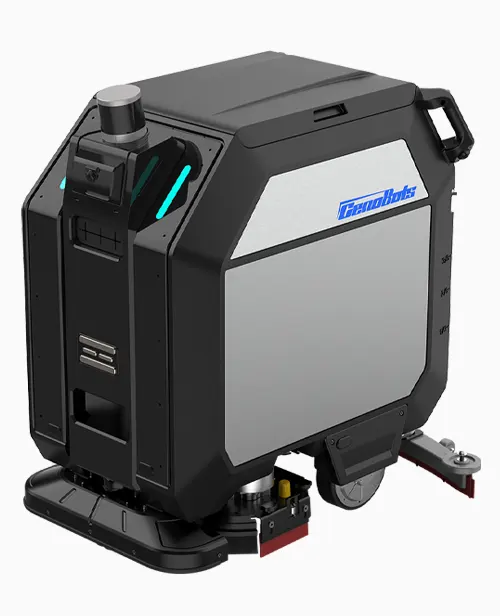
What are the specifications of the CenoBots L50 robot?
CenoBots L50 is an autonomous scrubber dryer with a working width of 510 mm, a 740 mm squeegee, and a 55-litre clean-water tank. Its theoretical productivity reaches approximately 2,203 m²/h, while its greater capacity and runtime of up to six hours set it apart from the other CenoBots scrubber models.
| Specification | CenoBots L50 |
| Dimensions (L × W × H) | 1,055 × 580 × 1,045 mm |
| Cleaning method | floor scrubbing and drying |
| Scrubbing width | 510 mm |
| Squeegee width | 740 mm |
| Clean-water tank | 55 L |
| Brush pressure | 25 kg |
| Max. theoretical productivity | approximately 2,203 m²/h |
| Max. speed | 1.2 m/s |
| Battery capacity | 120 Ah |
| Max. runtime | up to 6 h |
| AI computer | NVIDIA AI, 32 TOPS (“big model” architecture) |
| Navigation and sensors | 32-channel 3D LiDAR (range up to 150 m) + depth cameras (glass and protruding-object detection) |
| Consumption control | Save Water / Save Detergent (five-stage filtration, automatic detergent mixing) |
| Facility map | automatic updates |
Compared with the L3 and L4, the L50 has the widest working width and the largest clean-water capacity of these three scrubber models.
The Save Water and Save Detergent features control water and cleaning-agent use during operation.
The L50 also supports automatic map updates. When shelving, displays, or other equipment changes position within a facility, the robot can detect the change and update the information it uses for navigation.
What are the specifications of the CenoBots S5 robot?
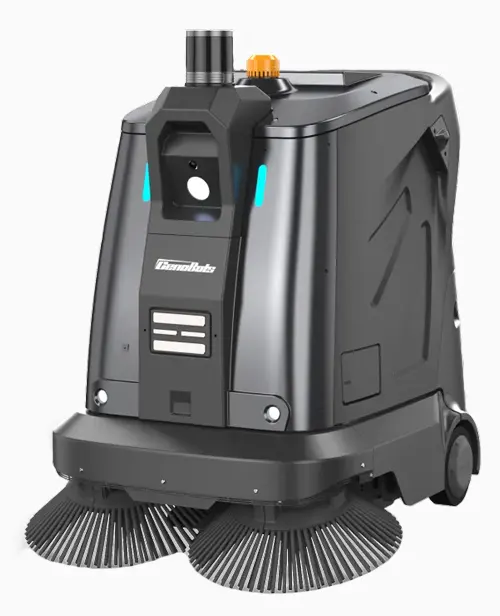
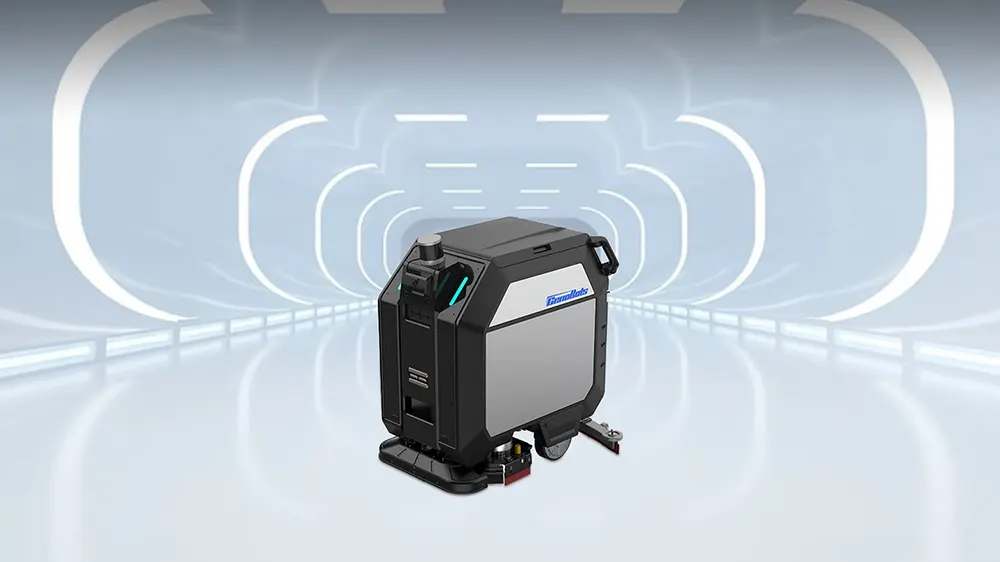
CenoBots S5 is an autonomous AI sweeper with a sweeping width of 820 mm and a 50-litre debris container. It dry-cleans hard floors and delivers theoretical productivity of approximately 2,500 m²/h. It uses 32-channel 3D LiDAR with a range of up to 150 metres, along with a system of cameras and sensors, for navigation.
The S5 fundamentally differs from the L3, L4, and L50 through its cleaning system. It does not use water to scrub floors. Instead, it sweeps and collects dust and dry debris from hard surfaces.
Its sensor system includes 32-channel 3D LiDAR, depth cameras, and other sensors for mapping, localisation, and obstacle detection.
The Vehicle Recognition feature is particularly relevant in dynamic industrial environments where the robot shares space with other vehicles and equipment.
| Specification | CenoBots S5 |
| Dimensions (L × W × H) | 1,030 × 720 × 990 mm |
| Cleaning method | dry sweeping |
| Sweeping width | 820 mm |
| Debris container | 50 L |
| Max. theoretical productivity | approximately 2,500 m²/h |
| Max. speed | 1.4 m/s |
| Min. distance from walls | 0 cm |
| Max. gradient | 8% |
| Battery | LFP, 75 Ah |
| Max. runtime | 5-7 h |
| Charging time | approximately 2 h |
| 3D LiDAR | 32-channel |
| LiDAR range | up to 150 m |
| AI computer | NVIDIA, 100 TOPS |
| Special features | Vehicle Recognition, Spot Cleaning (up to 4× faster than full-coverage cleaning), TeamClean, Dynamic Environment Adaptation, Advanced Dust Control (HEPA filtration + automatic filter “shaker”) |
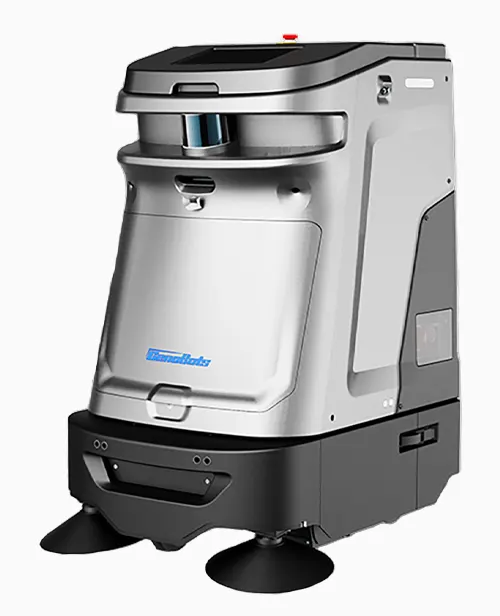
What are the specifications of the CenoBots SP50 robot?
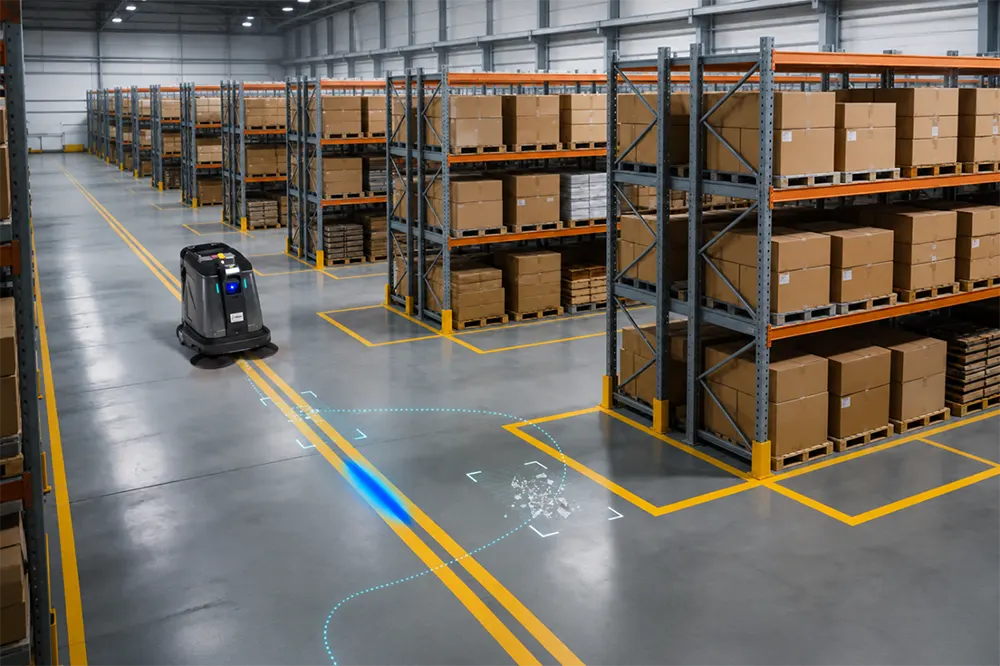
CenoBots SP50 is an autonomous vacuum sweeper with a cleaning width of up to 720 mm when using the side brushes and regular productivity of up to 1,987 m²/h. Its AI system recognises more than 30 types of waste, while Spot Cleaning targets detected dirt instead of requiring the robot to clean the entire surface.
| Specification | CenoBots SP50 |
| Dimensions (L × W × H) | 855 × 600 × 1,050 mm |
| Cleaning method | vacuuming and sweeping |
| Width with side brushes | 720 mm |
| Roller brush | 460 mm |
| Dust bag | 18 L |
| Debris container | 5 L |
| Max. suction power | 25 kPa |
| Max. speed | 1.2 m/s |
| Min. distance from walls | <5 cm |
| Max. gradient | 8% |
| Maximum hourly cleaning area during full-coverage cleaning | up to 1,987 m²/h |
| Maximum hourly cleaning area with targeted cleaning | up to 15,550 m²/h |
| AI computer | NVIDIA AI, 32 TOPS |
| Navigation and sensors | 32-beam 3D LiDAR (range up to 150 m) + 3D depth camera + bumper sensor + IMU sensor |
| Detection | more than 30 types of waste |
| Stated detection accuracy | 99% |
| Battery | LFP, 120 Ah / 24 VDC |
| Charging time | 4 h |
| Noise level | ≥58 dB(A) |
| Result verification | CRC – Cleaning Result Checkup |
The SP50 differs from the other models in how it uses AI waste detection. With AI Spot Cleaning, the system identifies localised dirt and directs the robot to clean the exact location where it detected it.
The CRC – Cleaning Result Checkup feature verifies the result after each pass and allows the robot to clean the area again when necessary.
It is important to distinguish between the two productivity figures. Up to 1,987 m²/h refers to regular cleaning, while up to 15,550 m²/h represents the area the robot can patrol in Spot/Patrol mode. You therefore cannot directly compare the second figure with the theoretical productivity of the L3, L4, L50, or S5.
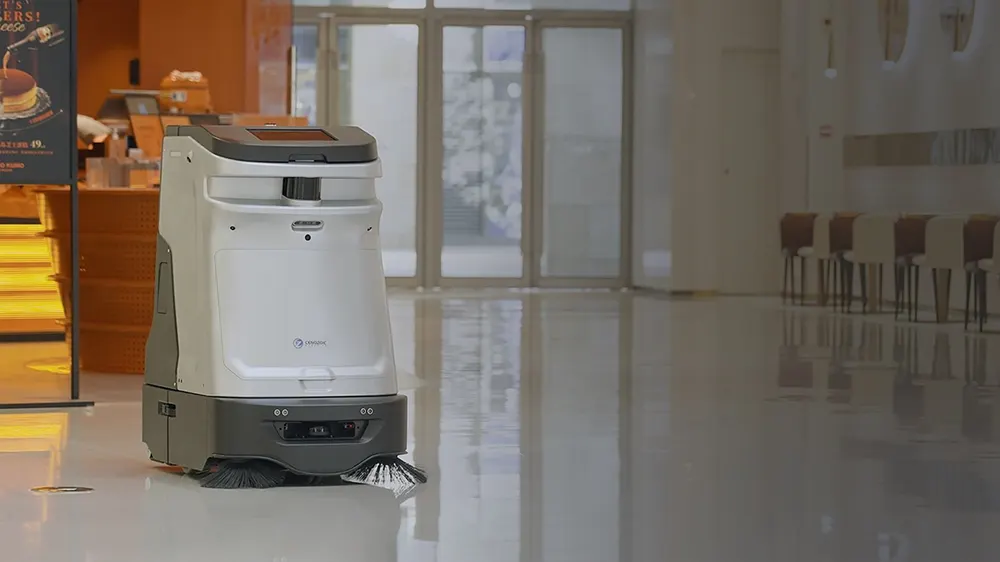
How do the specifications of CenoBots models differ?
The main technical differences between CenoBots models involve the cleaning method, working width, capacity, and productivity. The L3, L4, and L50 scrub and dry floors, the S5 performs dry sweeping, and the SP50 uses vacuuming and AI waste detection. You should therefore compare their numerical specifications within the context of the task.
| Feature | L3 | L4 | L50 | S5 | SP50 |
| AI computer | 100 TOPS | 32 TOPS | 32 TOPS | 100 TOPS | 32 TOPS |
| Battery capacity | 60 Ah | 70 Ah | 120 Ah | 75 Ah | 120 Ah |
| Charging time | 1.5-2 h | 2.7 h | not specified | 2 h | 4 h |
| Max. runtime | up to 4 h | up to 4.5 h | up to 6 h | 5-7 h | 8-13 h |
| Noise level | not specified | ≥66 dB(A) | not specified | not specified | ≥58 dB(A) |
| Max. gradient | 8% | 8% | not specified | 8% | 8% |
CenoBots cleaning robot models – FAQ
What is the TeamClean feature?
TeamClean allows multiple CenoBots robots to work together in the same facility without requiring an operator to coordinate their sequence manually. The S5 most commonly uses this feature alongside scrubber-dryer models (L3, L4, or L50) in a “sweep-then-scrub” workflow. The S5 first sweeps dry debris from the surface, and the scrubber robot then wet-cleans the same area.
What is Dynamic Environment Adaptation?
Dynamic Environment Adaptation allows the robot to adjust its route and behaviour in real time when it encounters changes in the facility, such as a moved pallet, a new vehicle, or a temporary obstacle that was not part of the original map. This feature is particularly relevant for the S5 in large industrial facilities where layouts change from one shift to another.
What is Advanced Dust Control on the S5?
Advanced Dust Control combines powerful suction with HEPA filtration and an automatic “shaker” mechanism that regularly cleans the filter during operation and prevents clogging. This combination allows the S5 to collect both fine dust and larger industrial debris efficiently without losing suction power during extended operation.
What is the difference between the CenoBots S5 and SP50?
The S5 is primarily an autonomous sweeper for dry-sweeping large areas, while the SP50 combines vacuuming, sweeping, and AI waste detection for Spot Cleaning.
The right choice begins with the space and the task you need to automate, not with a specification. If you want to determine which solution best suits your floors, workflows, and cleaning requirements, we can start with a brief assessment of your needs. The right model fits naturally into your facility’s daily operations.
About the author:
Milja Tonić – SEO Content Strategist & Copywriter
Milja Tonić is an SEO Content Strategist and Copywriter who specialises in creating expert content about facility management, professional maintenance of commercial facilities, and cleaning-process automation.
Through research, SEO strategy, and original content development, she creates content about professional hygiene, facility management, and the use of autonomous cleaning robots in various business environments.