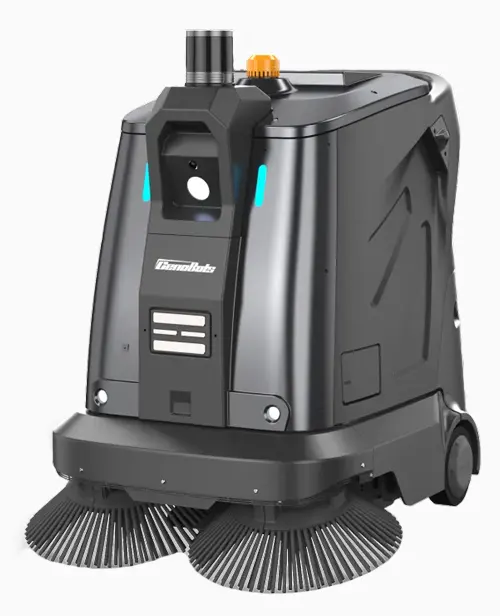
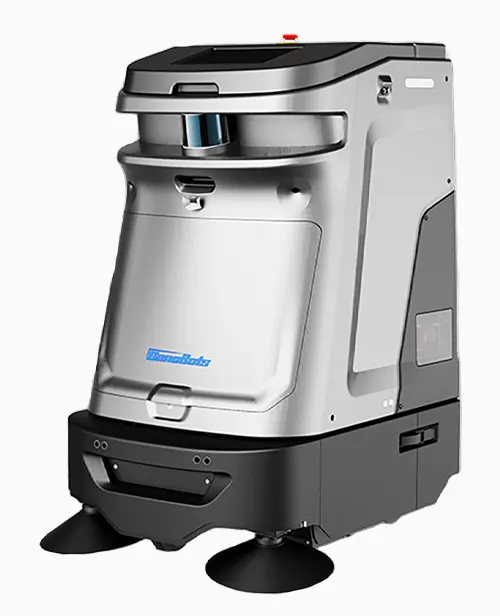


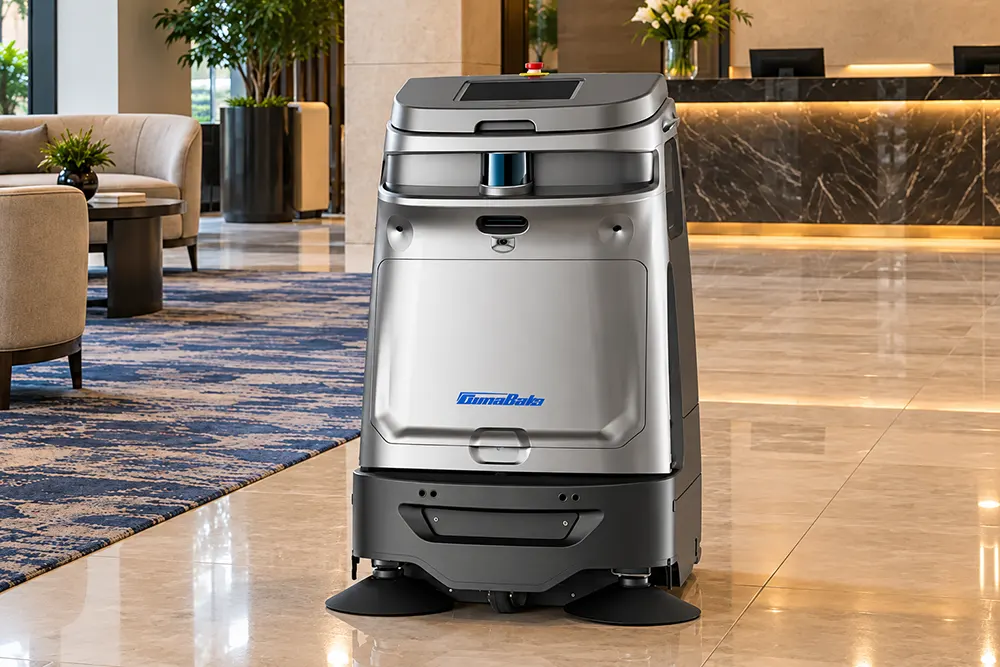
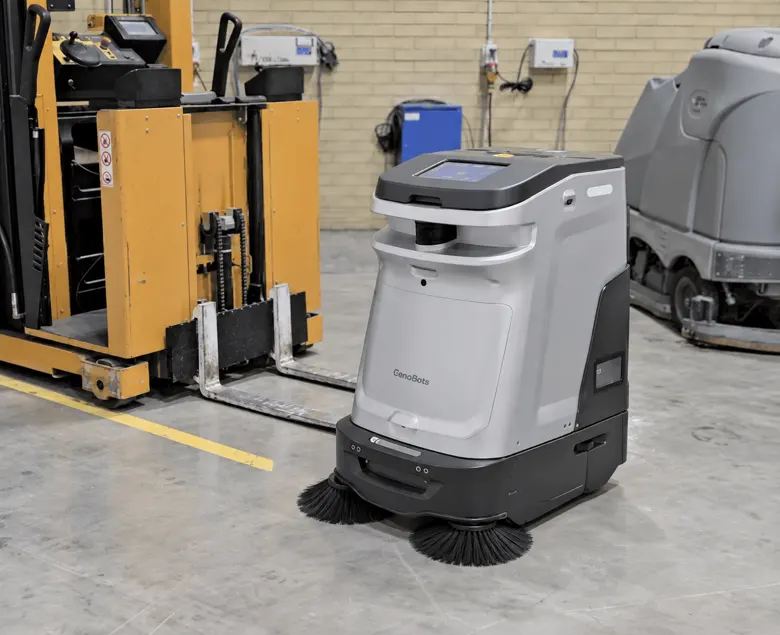
How does targeted ai floor cleaning work? CenoBots SP50 is an autonomous vacuuming and sweeping robot that can systematically clean a planned area, while AI Spot Cleaning allows it to respond additionally to detected dirt. The robot recognizes debris on the floor and can direct cleaning toward a specific zone, complementing regular maintenance of the entire area with targeted cleaning.
This operating principle is particularly useful for facilities where dirt does not appear evenly throughout the day. SP50 combines AI Intelligent Recognition, powerful 25 kPa suction, autonomous navigation, and the ability to operate on hard floors and carpets. The manufacturer specifies a maximum operating time of up to 13 hours, depending on conditions and operating mode.
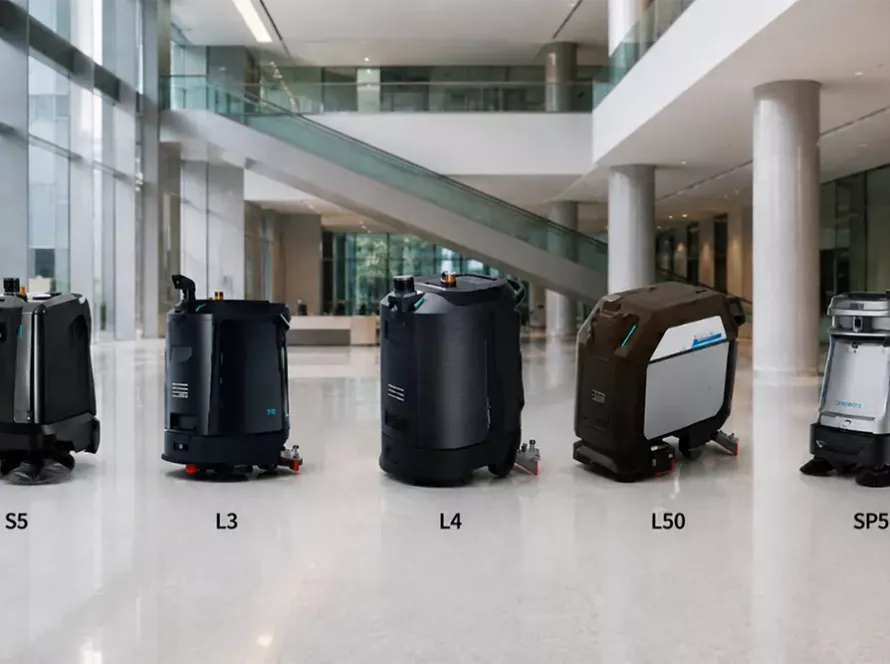
SP50 is designed for vacuuming and sweeping, while other models handle different floor maintenance tasks. A comparison of CenoBots cleaning robot models shows their key differences and helps users choose a model according to the facility.
How does the robot recognize where it needs to clean?
SP50 uses an AI recognition system to identify dirt during operation and respond to its location. Spot Cleaning therefore does more than follow a predefined route: the robot uses sensors and algorithms to detect debris and then dynamically adjusts its movement to collect it instead of unnecessarily cleaning the entire surrounding area.
This is an important difference between navigation and dirt recognition. The map tells the robot where it can move, while AI perception allows it to respond to what it finds on the floor during operation.
According to the manufacturer’s current specifications, the stated recognition accuracy reaches up to 99%. This figure should be viewed as a manufacturer specification rather than a guarantee of identical results in every facility.
Does CenoBots SP50 work on carpets or only on hard floors?
CenoBots SP50 can operate on both hard floors and carpets, making it suitable for facilities with different flooring surfaces. As a vacuum sweeper robot, its task is to vacuum and collect dry debris rather than wet-scrub floors like CenoBots scrubber-dryer models.
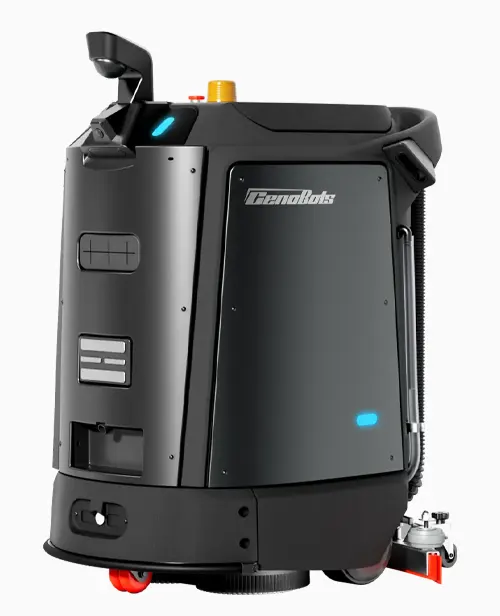
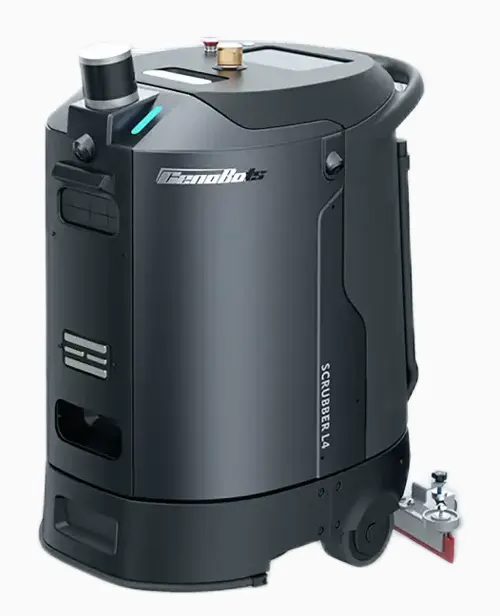
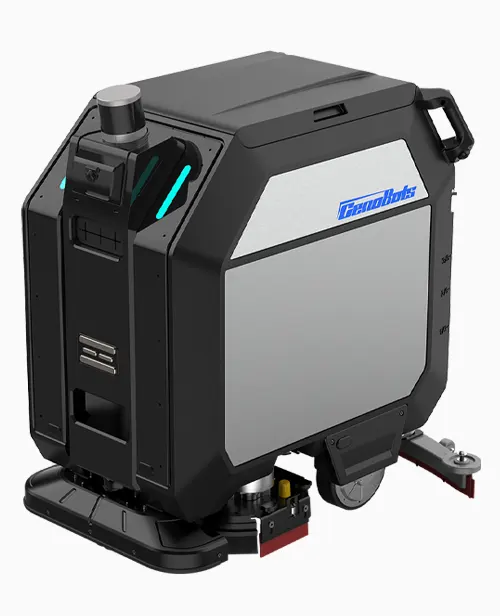
This is precisely why SP50 differs from the L3, L4 and L50 models. If a facility requires hard-floor washing with water and an appropriate brush system, a scrubber-dryer is the right choice. If the priorities are carpets, hard surfaces and targeted removal of dry debris, SP50 serves a different purpose.
How quickly can it respond to localized dirt in a large facility?
SP50 is designed so that targeted cleaning reduces unnecessary movement through areas that are already clean. CenoBots specifies a maximum theoretical productivity of up to 15,550 m²/h for Spot Cleaning, but this does not mean that the robot physically vacuums every square meter of such a large area within one hour.
This high figure comes directly from a different operating principle: the robot can move through a larger zone and intervene where cleaning is needed.
How much suction power does CenoBots SP50 have?
CenoBots specifies a suction power of 25 kPa for SP50. Combined with a 460 mm roller brush and a total cleaning width of 720 mm, the system is designed to collect dry debris from commercial flooring surfaces, while AI determines where targeted cleaning is required.
SP50 has a 5-liter debris container and an 18-liter filter bag. These are important specifications when assessing the model for a facility because the collection system capacity should be considered together with the type and quantity of debris that actually appears in the space.
How long can CenoBots SP50 operate without charging?
CenoBots specifies a maximum operating time of up to 13 hours for SP50. The actual time between charging cycles depends on how the robot is used, the task and conditions within the facility, so the maximum value should not be interpreted as a fixed duration for every operating cycle. The robot is designed to return for charging autonomously.
How does it adapt when the layout of the space changes?
SP50 supports automatic map updates, allowing it to account for changes in the working environment without relying solely on the originally created map. This is important in commercial facilities where the position of equipment, furniture or other elements may change during daily operations.
Safe movement does not depend on the map alone. CenoBots specifies detection up to 150 meters for SP50, as well as systems for detecting protruding objects and glass surfaces. These functions support navigation and environmental perception, while AI Spot Cleaning has a different task – locating areas that require cleaning.
How close to edges can SP50 clean?
According to the manufacturer’s specification, SP50 can clean at a distance of less than 5 cm from an edge. This allows the robot to approach the perimeter of a space during autonomous operation, while actual performance along walls and obstacles depends on the geometry of the zone and the conditions in which the robot operates.
Can the robot be controlled through an app?
Yes. The mobile app allows users to monitor SP50’s movement and current location, review important operating information, plan routes and receive notifications about completed tasks. This allows the operator to supervise cleaning without physically following the robot through the facility during every operating cycle.
The app therefore does not replace the robot’s AI perception but instead supports control and monitoring. SP50 performs its floor-cleaning task independently, while the responsible person uses the app to monitor its operation and organize cleaning across different zones more easily.
What types of facilities is CenoBots SP50 designed for?
SP50 autonomously maintains hard floors and carpets in commercial spaces and responds to dirt that appears throughout the day. CenoBots lists hotels, hospitals, retail and educational facilities among its application scenarios and also presents the robot as suitable for other high-traffic commercial spaces.
What should you check before buying CenoBots SP50?
Before buying SP50, you should check the types of flooring, the facility’s area and layout, the type and quantity of debris, passage widths, expected operating time and the balance between Spot Cleaning and full-coverage tasks. Only after comparing these conditions with the robot’s capabilities can you assess whether it suits a specific location.
| Technical specification | CenoBots SP50 |
| Dimensions | 855 × 600 × 1,050 mm (width without side brushes) |
| Cleaning width | 720 mm |
| Roller brush length | 460 mm |
| Suction power | 25 kPa |
| Debris container capacity | 5 l |
| Filter bag capacity | 18 l |
| Maximum stated operating time | up to 13 hours |
| Max. theoretical productivity – Spot Cleaning | up to 15,550 m²/h |
| Max. theoretical productivity – Full Coverage | up to 1,987 m²/h |
CenoBots S50: How does targeted ai floor cleaning work?- FAQ
Can CenoBots SP50 operate while people are present in the facility?
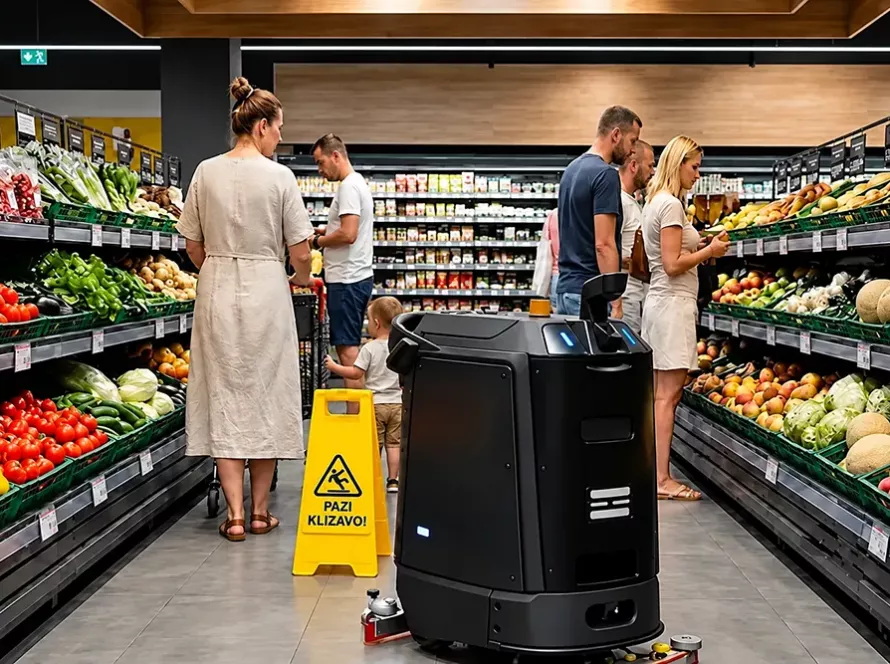
SP50 moves autonomously through commercial spaces and uses sensor and navigation systems to perceive its surroundings. However, operating conditions should align with the specific facility, its rules and the level of foot traffic.
More broadly, ISO standards for autonomous mobile systems emphasize the importance of conditions within the operating zone for safe operation, which is why the use of an autonomous robot should be considered within the context of the specific facility.
What types of debris can CenoBots SP50 recognize?
CenoBots states that SP50’s AI system can detect and classify more than 30 types of debris and dirt. This recognition allows the robot to direct cleaning toward detected zones in Spot Cleaning mode instead of treating every surface in the same way.
How do you empty the debris collected by CenoBots SP50?
SP50 collects dirt during vacuuming and sweeping in its dedicated waste collection system. According to the technical specifications, the manufacturer instructs users to maintain the robot’s 5 l debris container and 18 l filter bag according to its guidelines.
Cleaning that follows the space without disrupting its rhythm. CenoBots SP50.
About the author:
Milja Tonić – SEO Content Strategist & Copywriter
Milja Tonić is an SEO Content Strategist and Copywriter specializing in creating expert content in the fields of facility management, professional maintenance of commercial facilities and cleaning process automation.
Through research, SEO strategy and original content development, she creates content about professional hygiene, facility management and the use of autonomous cleaning robots in different business environments.